
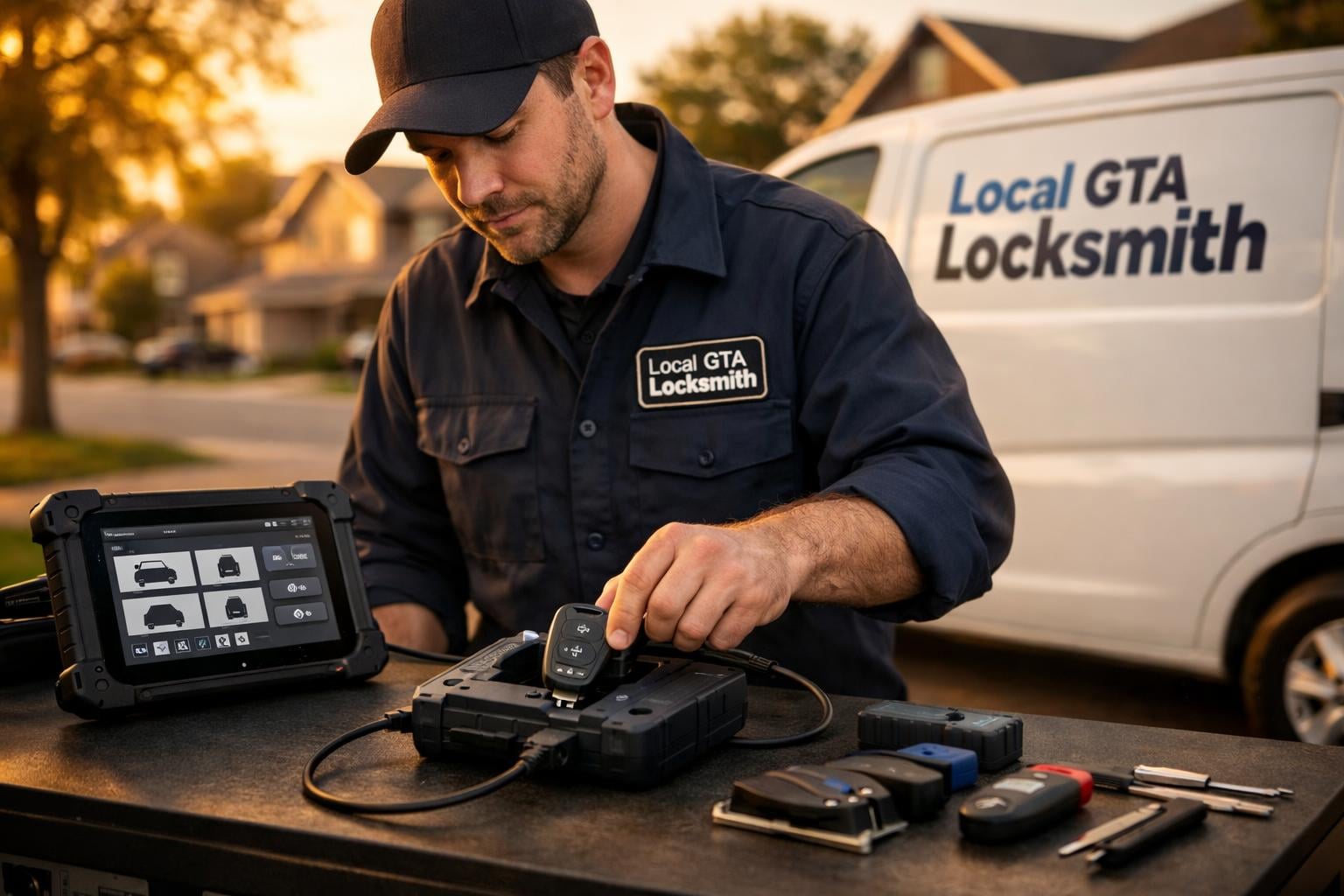
Ford Key Programming | GTA
Ford-specific key programming guidance focused on compatibility, pairing workflow, and how replacement or aftermarket keys are verified on the vehicle.
Best next step
Use this page when the key or fob already exists but you still need clarity on compatibility, pairing, or what should be tested before trusting it.
Make-specific
Platform context matters
Workflow
OEM and system differences
Next-step routes
Service and security branches
What this guide covers
Ford-specific key programming guidance focused on compatibility, pairing workflow, and how replacement or aftermarket keys are verified on the vehicle.
Get a quote by phone
Tell us your vehicle year, make, model, and what happened. We quote over the phone - no obligation until you say go.
Call Now: (647) 557-8103Why Ford programming pages add value
Programming queries often come from users who already have a key, blank, or fob in hand but still do not know if the workflow is viable.
Compatibility questions come first
The strongest copy angle is usually vehicle uptime, fleet practicality, and avoiding towing or long dealer scheduling windows. That is why this page starts with brand context instead of generic programming promises.
Model-aware expectations
Owners of F-150, Escape, and Explorer usually want to know whether the job is simple spare-key pairing, aftermarket troubleshooting, or a deeper immobilizer-style workflow.
Programming is not only about one button click
This branch is useful because remote-start, truck/SUV key workflows, and transponder or proximity systems common on North American platforms usually requires pairing, function testing, and realistic compatibility checks.
Common Ford programming scenarios
The best brand-service pages mirror real search situations rather than a vague technical checklist.
Adding a second working key
A user still has one functioning key and wants a spare programmed before an emergency happens.
Aftermarket or replacement key will not sync
The key exists, but the vehicle still does not recognize start authorization, remote features, or both.
Remote functions are only partly working
Lock, unlock, trunk, or push-start behaviour may need deeper testing than the user expected.
Where to branch after this page
Users should be able to move cleanly into the right route once they know what kind of programming issue they are really facing.
Step-by-step
- 1
Direct key programming service page
Use it when the user already knows programming is the main next step.
- 2
Aftermarket programming problem page
Useful when compatibility uncertainty still sits above the service intent.
- 3
Smart-key branch
Relevant when the job clearly involves higher-complexity proximity or push-to-start behaviour.
Why this matters
- Ford context for models like the F-150, Escape, and Explorer.
- remote-start, truck/SUV key workflows, and transponder or proximity systems common on North American platforms
- The strongest copy angle is usually vehicle uptime, fleet practicality, and avoiding towing or long dealer scheduling windows.
Questions that usually change the next step
These details usually decide whether the fastest route is direct service, compatibility troubleshooting, repair, or security follow-up.
Programming only works when the key is the right fit
A bought-online blank or replacement fob may still be the wrong part, even if the shell or buttons look right.
Partial function can still mean the route is wrong
Lock and unlock response does not always prove the key is fully paired and ready for everyday use.
Verification matters before more money is spent
The best next step is often checking compatibility first instead of repeating the same programming attempt again.
What usually matters on this make
These make-specific details often influence the key type, the workflow, and what the safest next step looks like.
Key detail 1
Ford context for models like the F-150, Escape, and Explorer.
Key detail 2
remote-start, truck/SUV key workflows, and transponder or proximity systems common on North American platforms
Key detail 3
The strongest copy angle is usually vehicle uptime, fleet practicality, and avoiding towing or long dealer scheduling windows.
Choose the best route from here
Brand-specific pages work best when they help users decide whether to continue researching the make, move into the direct service path, or compare a related intent cluster.
Ford Brand Hub
Return to the Ford overview page for broader make-specific research.
- Ford context for models like the F-150, Escape, and Explorer.
- Use this route when you want a more specific next step than a generic service overview.
Key Programming
Use the main service page when you want the direct operational route without the brand-specific context layer.
- remote-start, truck/SUV key workflows, and transponder or proximity systems common on North American platforms
- Use this route when you want a more specific next step than a generic service overview.
Aftermarket Key or Fob Not Programming?
Read the diagnosis-first page for this symptom before or after reviewing the direct service.
- The strongest copy angle is usually vehicle uptime, fleet practicality, and avoiding towing or long dealer scheduling windows.
- Use this route when you want a more specific next step than a generic service overview.
Brand and service routes
Use these links to move into the direct service page, a closer diagnosis route, or the wider brand hub if you still need broader research.
Ford Brand Hub
Return to the Ford overview page for broader make-specific research.
Compare Ford Brand HubKey Programming
Use the main service page when you want the direct operational route without the brand-specific context layer.
Go to Key ProgrammingAftermarket Key or Fob Not Programming?
Read the diagnosis-first page for this symptom before or after reviewing the direct service.
Read Aftermarket Key or Fob Not Programming?Need a Spare Car Key Before the Emergency?
Read the diagnosis-first page for this symptom before or after reviewing the direct service.
Read Need a Spare Car Key Before the Emergency?Common questions
These answers focus on the brand-specific details that usually matter before booking the job.
Can you program Ford keys on-site?
In many cases, yes. The exact workflow still depends on the Ford platform, the key type, and whether the starting point is a spare, a replacement, or an aftermarket key.
Why does programming differ by Ford model?
Because different trims and platforms can change how the key must be paired, what functions are being added, and how compatibility is verified.
What if my Ford aftermarket key still will not sync?
That is exactly where a diagnosis-first branch is useful, because the issue may be compatibility rather than only the programming step itself.
Ready to move forward?
Need Ford programming help?
Use the direct programming page if the path is already clear, or compare the aftermarket problem page when compatibility is still the bigger question.