
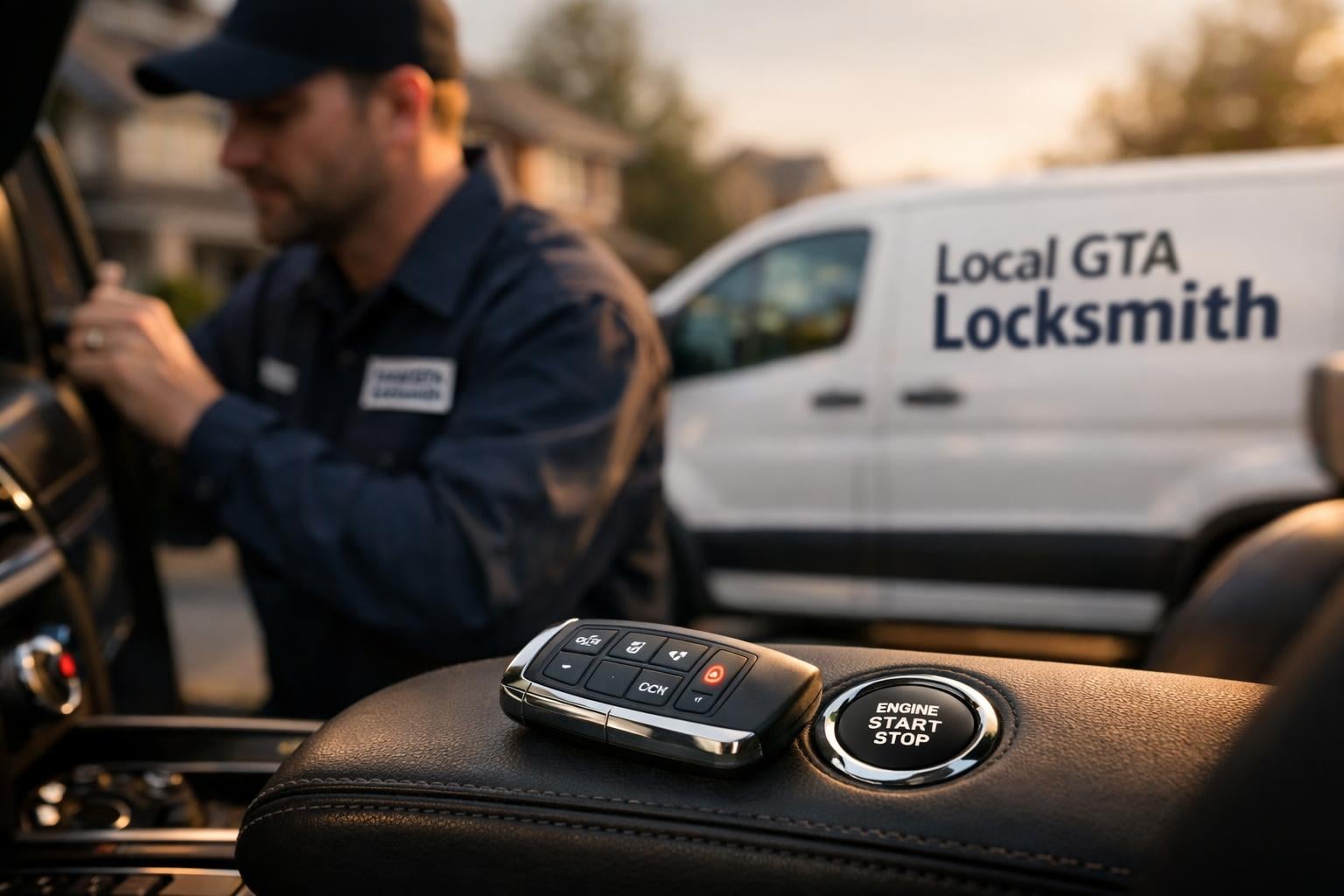
Push-to-Start and Smart-Key Security
A security-focused page for owners of push-to-start and proximity-key vehicles who want to understand key-management risk, replacement workflows, and sensible anti-theft next steps.
Best next step
Push-to-start concerns usually combine convenience, replacement planning, and security risk. This page helps users sort those into the right branch.
Proximity
Modern key behavior
Spare logic
Backup planning matters
Security
Exposure changes the route
Security guidance
A security-focused page for owners of push-to-start and proximity-key vehicles who want to understand key-management risk, replacement workflows, and sensible anti-theft next steps.
Get a quote by phone
Tell us your vehicle year, make, model, and what happened. We quote over the phone - no obligation until you say go.
Call Now: (647) 557-8103Why this intent is different
Push-to-start owners often search from a mix of convenience, security, and uncertainty about how modern key systems behave.
Modern convenience creates a different risk conversation
Users are not just asking about a metal key. They want to understand smart-access behaviour, proximity expectations, and what happens if the fob becomes unreliable or exposed.
The backup plan matters more than users expect
A single smart key or fob can become a real bottleneck if it is lost, damaged, or no longer detected reliably.
Security questions are often tied to ownership habits
How keys are stored, shared, and replaced can be as important as the hardware discussion itself.
Useful guidance points
A strong page should translate vague smart-key concern into actionable branches.
Smart-key replacement and testing
Owners often need to know how replacement, pairing, and function verification actually fit together.
Spare-key planning for proximity vehicles
This is especially valuable when the vehicle currently depends on a single fob.
Security escalation after key exposure
If a proximity key may have been lost or stolen, the decision path is different than a simple low-battery situation.
Which smart-key branch fits your situation?
Push-to-start and proximity users often need a clearer split between convenience problems, replacement problems, and security problems.
Smart-key programming
Best fit when the user already has the replacement or the main need is pairing and verification with the vehicle.
- Useful when the key path is already operationally clear
- Good branch for testing and synchronization needs
- More about workflow than broader risk
Fob replacement
Best fit when the smart fob itself is unreliable, damaged, or no longer worth trying to keep in service.
- Useful when the hardware feels like the main weak point
- Good route for damaged or unreliable smart fobs
- A stronger fit than generic security content when risk is low
Exposure or theft concern
Best fit when the issue is no longer just convenience or hardware, but what the missing or exposed smart key means for the vehicle.
- Useful when the owner is worried about who may have the key
- Moves the page out of simple replacement territory
- Often the right branch after a suspected stolen-key event
How to think about push-to-start risk
Use this page to separate convenience concerns from true security concerns before choosing the wrong fix.
Step-by-step
- 1
Decide whether the issue is weak-fob behavior or key exposure
A failing smart key and a stolen smart key can sound similar in search, but they create very different next-step logic.
- 2
Check whether the vehicle depends on only one working fob
That changes how urgently the owner should think about spare planning, replacement workflow, and overall risk.
- 3
Separate replacement workflow from anti-theft concern
Some users need a new fob or pairing help; others also need a broader security response because of exposure or theft concern.
Why this matters
- The tone here should stay practical, not alarmist.
- Smart-key users often need decision support more than technical jargon.
- The best next step depends on whether the key issue is usability, ownership planning, or exposure risk.
What users often misunderstand about smart-key security
This page is strongest when it clarifies the ownership and risk logic, not when it drifts into vague warnings.
A weak smart key is only a convenience issue
Sometimes yes, but in other cases it changes how confidently the owner can rely on the vehicle day to day.
Push-to-start vehicles do not need spare planning
The opposite is often true: smart-key convenience can hide how fragile the backup situation really is.
Every smart-key concern starts with replacement
Some cases are replacement or pairing problems, while others are really about key exposure and anti-theft thinking.
Security routes and next steps
These routes help connect the educational intent with the service or planning path that fits the situation.
Smart Key Programming
Use the direct service page when pairing and function verification are the main need.
Go to Smart Key ProgrammingKey Fob Replacement
Relevant when the smart fob itself is the weak link.
Go to Key Fob ReplacementStolen Key Response
Review this branch if the risk comes from key exposure rather than battery or wear.
Review Stolen Key ResponseCommon questions
These questions focus on when push-to-start ownership becomes a security and decision problem, not just a fob problem.
Why is push-to-start security a different topic?
Because the conversation includes smart-key detection, proximity convenience, replacement workflow, and key-control habits rather than only a mechanical key issue.
Should smart-key owners always keep a spare?
It is often a practical idea, especially when the vehicle currently depends on one fob and the owner uses the car daily.
Does a weak smart key create only a convenience issue?
Not always. A failing or exposed smart key can affect both day-to-day usability and the owner's sense of vehicle security.
When does a push-to-start issue belong on a security page instead of a replacement page?
When the concern is not just a weak or damaged fob, but what the missing, exposed, or unreliable smart key means for how confidently you can control and protect the vehicle going forward.
Ready to move forward?
Need the smart-key branch?
Use the direct smart-key service page when you are already in a replacement or programming workflow, or stay inside the security cluster if you are still evaluating risk and next steps.