
Sometimes. You can replace a basic metal key yourself, and on some cars you can self-program a spare transponder key if you still have one working key. But for smart keys, all-keys-lost situations, or most newer vehicles, DIY usually fails or risks errors that cost more to fix than the job would have. Here is when doing it yourself is realistic, and when to call a pro.
The whole answer depends on the type of key your car uses. Get that wrong and you can waste money on a blank that never works, or worse, scramble the car's security. Start with the quick guide below.
From the field
One driver (call him K.) tried a cheap online key kit on a newer Hyundai and ended up locking out his working key during a failed programming attempt. We reset it and programmed a proper key. DIY is fine on a plain metal key, but on chip and smart keys it is where most of these salvage calls begin.
Can you replace your car key yourself? Quick guide
| Key type | DIY realistic? | What is involved |
|---|---|---|
| Basic metal key | Yes | Buy a blank, get it cut. No programming. |
| Transponder key, you have a working key | Sometimes | Some cars allow an owner's-manual self-program with a working key present |
| Transponder key, no working key | No | Needs professional diagnostic tools |
| Smart / push-to-start | No (usually) | Encrypted, needs pro programming |
When you can replace a car key yourself
DIY makes sense in a few cases:
- Your car uses a plain metal key with no chip. Buy a blank and have it cut.
- You already have one working key, and your model allows a self-program sequence from the owner's manual.
- You only need a duplicate, not a key built from scratch.
Duplicating is far easier than replacing a completely lost key. The job gets harder fast with newer cars that use encrypted transponder or smart-key technology.
Tools you would actually need
A blank key is rarely the whole story:
- Traditional key: a key-cutting machine, or a quick trip to a locksmith
- Transponder key: a programming tool that talks to the car's computer
- Smart key / fob: battery install, electronic syncing and remote programming
Cheap aftermarket programming kits exist, but compatibility problems are common and the wrong key blank is a frequent and costly mistake.
Need help right now?
Not sure if your car is a DIY job or a pro one? Tell us the year, make and model. We will tell you straight, and quote it if you want us to handle it.
Call (647) 557-8103 - free quote by phone, no obligationThe real risks of DIY
- Damaging the immobilizer or security system with a bad programming attempt
- Buying an incompatible key that looks identical but has the wrong chip or frequency
- Erasing your working keys, since some systems wipe all keys during reprogramming
- An unreliable key that works for a while, then strands you later
Failed DIY attempts often end with a locksmith or dealer bill anyway, sometimes plus a module repair. That is the trade-off to weigh.
Locksmith vs dealership
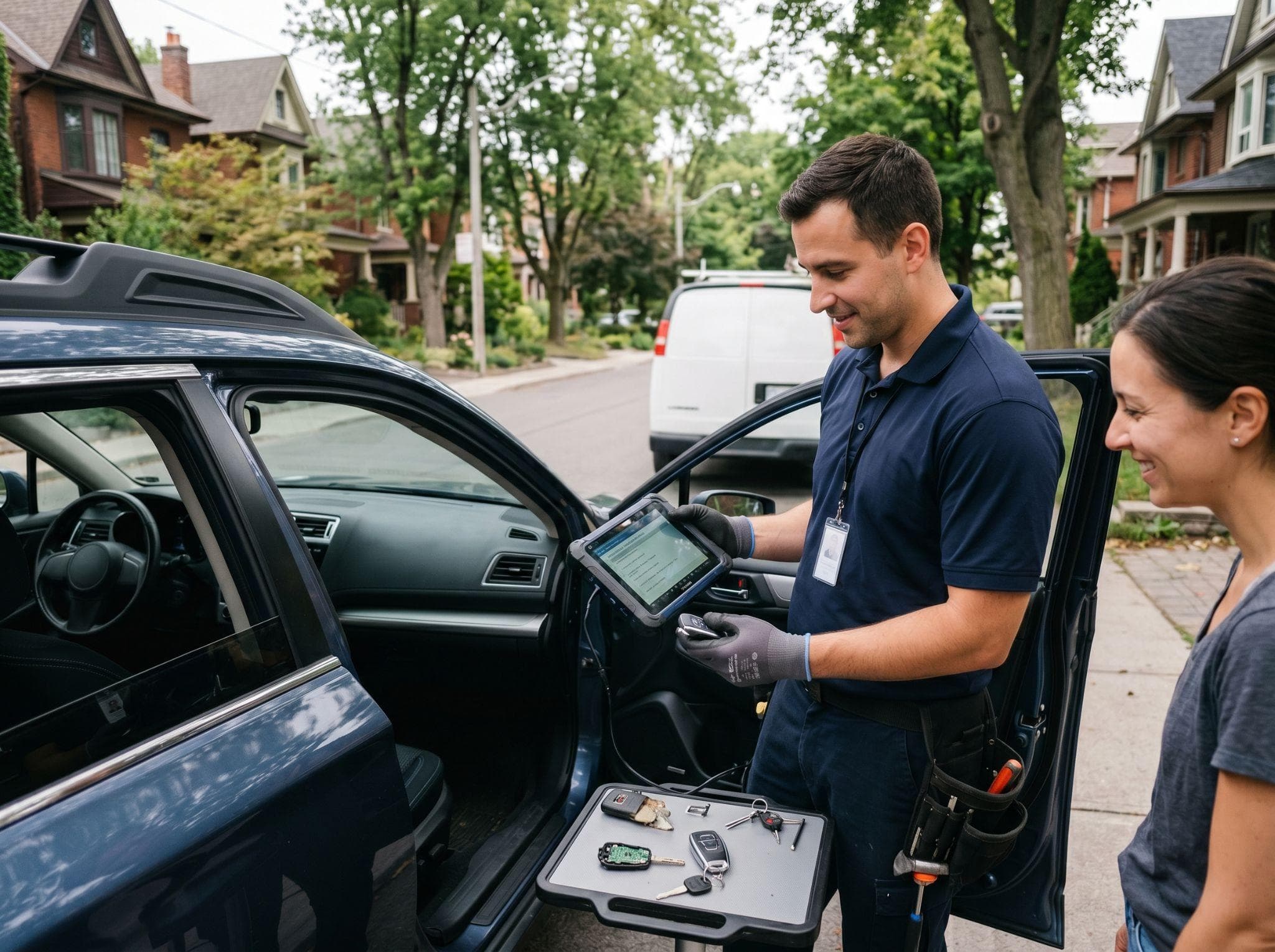
Both can make a working key. A dealership uses factory parts and programming, but tends to cost more, often needs an appointment, and may require the car to be brought (or towed) in. A mobile automotive locksmith usually carries blanks and programming gear in the van, comes to your home, office or roadside, and finishes the same day for most vehicles. If you have no key at all, see lost car key help.
How to prevent future key problems
- Make a spare key before an emergency, while a working key exists
- Keep the fob away from water and heat, and use a protective case
- Replace a weak fob battery early, many "broken" keys are just dead batteries
- Skip heavy keychains, the weight wears the ignition cylinder over time