
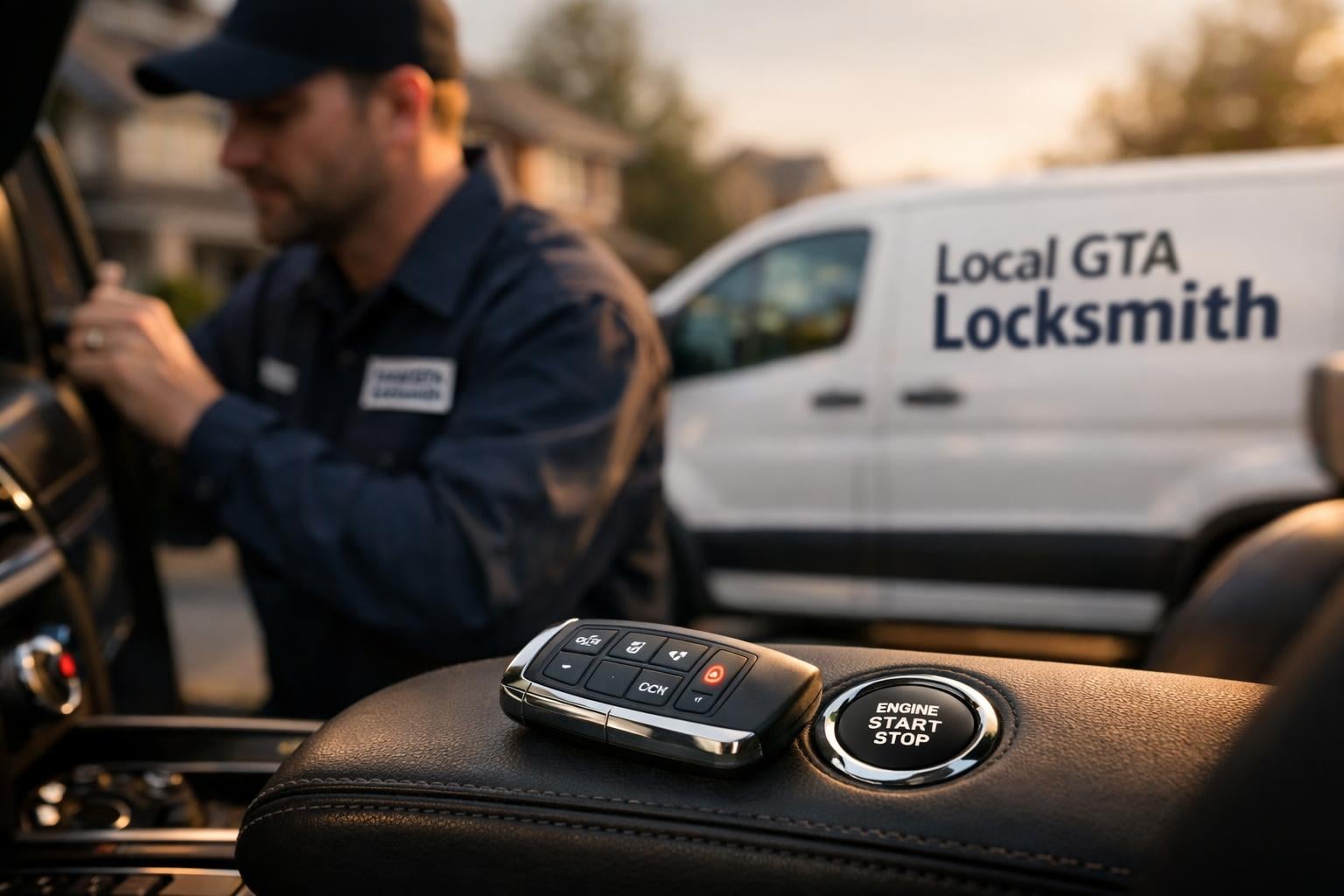
BMW Smart Key Programming | GTA
BMW-specific smart-key programming guidance focused on proximity systems, push-to-start workflows, compatibility checks, and realistic mobile service expectations.
Best next step
Use this page when the vehicle relies on a smart key or push-to-start system and you need a clearer route into pairing, verification, or security follow-up.
Make-specific
Platform context matters
Workflow
OEM and system differences
Next-step routes
Service and security branches
What this guide covers
BMW-specific smart-key programming guidance focused on proximity systems, push-to-start workflows, compatibility checks, and realistic mobile service expectations.
Get a quote by phone
Tell us your vehicle year, make, model, and what happened. We quote over the phone - no obligation until you say go.
Call Now: (647) 557-8103Why BMW smart-key intent is different
This route is most useful for drivers with higher-complexity convenience systems who need clearer guidance than a broad programming page can provide.
Smart-key jobs combine convenience and security
Security and control-system integrity are part of the buying decision, not just convenience. That usually makes a make-specific route more helpful than a broad one-size-fits-all page.
BMW platform detail matters
premium immobilizer, smart-key, and module-sensitive workflows common on German luxury vehicles influences how proximity functions, push-start behaviour, and overall pairing expectations should be explained.
Users often arrive with partial symptoms
They may have a fob that unlocks but does not start the vehicle, or a replacement smart key that still feels incomplete.
What BMW owners usually compare on smart-key jobs
These are the practical branches owners usually compare before they know whether to continue with smart-key programming, replacement, or security follow-up.
Spare smart-key planning
Some users want a second proximity key before the only working fob becomes the next emergency.
Replacement smart-key pairing
Others already have a replacement key or fob and need realistic guidance about compatibility and testing.
Security-aware follow-up
Because smart-key ownership often overlaps with anti-theft concern, some situations are better handled with a security follow-up after the key issue is understood.
Useful next-step pages
These next-step pages usually make the route clearer once the key type and the real problem are understood.
Step-by-step
- 1
Direct smart-key programming service
Use the operational route when the smart-key job is already clearly defined.
- 2
Push-to-start key security
Helpful for users whose main concern is now the broader security angle of smart-key ownership.
- 3
Key fob replacement
Relevant if the physical or electronic fob condition still needs to be solved before the programming workflow makes sense.
Why this matters
- BMW context for models like the 3 Series, 5 Series, and X5.
- premium immobilizer, smart-key, and module-sensitive workflows common on German luxury vehicles
- Content should explain why these jobs are more diagnostic and validation-heavy without drifting into vague claims.
Questions that usually change the next step
These details usually decide whether the fastest route is direct service, compatibility troubleshooting, repair, or security follow-up.
Smart-key pages need stronger control and security framing
Convenience features, access control, and trust in the final testing result matter more here than on a basic key route.
Partial function should be treated as uncertainty, not success
Unlocking the doors is not enough if start authorization or proximity behavior is still inconsistent.
The best route often branches into security follow-up
These pages are strongest when they connect vehicle access decisions with broader push-to-start or smart-key risk context.
What usually matters on this make
These make-specific details often influence the key type, the workflow, and what the safest next step looks like.
Key detail 1
BMW context for models like the 3 Series, 5 Series, and X5.
Key detail 2
premium immobilizer, smart-key, and module-sensitive workflows common on German luxury vehicles
Key detail 3
Content should explain why these jobs are more diagnostic and validation-heavy without drifting into vague claims.
Choose the best route from here
Brand-specific pages work best when they help users decide whether to continue researching the make, move into the direct service path, or compare a related intent cluster.
BMW Brand Hub
Return to the BMW overview page for broader make-specific research.
- BMW context for models like the 3 Series, 5 Series, and X5.
- Use this route when you want a more specific next step than a generic service overview.
Smart Key Programming
Use the main service page when you want the direct operational route without the brand-specific context layer.
- premium immobilizer, smart-key, and module-sensitive workflows common on German luxury vehicles
- Use this route when you want a more specific next step than a generic service overview.
Aftermarket Key or Fob Not Programming?
Read the diagnosis-first page for this symptom before or after reviewing the direct service.
- Content should explain why these jobs are more diagnostic and validation-heavy without drifting into vague claims.
- Use this route when you want a more specific next step than a generic service overview.
Brand and service routes
Use these links to move into the direct service page, a closer diagnosis route, or the wider brand hub if you still need broader research.
BMW Brand Hub
Return to the BMW overview page for broader make-specific research.
Compare BMW Brand HubSmart Key Programming
Use the main service page when you want the direct operational route without the brand-specific context layer.
Go to Smart Key ProgrammingAftermarket Key or Fob Not Programming?
Read the diagnosis-first page for this symptom before or after reviewing the direct service.
Read Aftermarket Key or Fob Not Programming?Push-to-Start and Smart-Key Security
Useful for users who also need the security or anti-theft context around this service.
Review Push-to-Start and Smart-Key SecurityCommon questions
These answers focus on the brand-specific details that usually matter before booking the job.
Can you program BMW smart keys on-site?
In many cases, yes. The exact workflow depends on the BMW platform, the smart-key type, and whether the starting point is a spare, a replacement, or a failing original fob.
Why is smart-key programming more useful as a BMW-specific page?
Because the real differences come from platform behaviour, convenience features, and how models like the 3 Series, 5 Series, and X5 handle pairing and verification.
Should smart-key users also read the security pages?
Often yes, especially when the vehicle depends on one working fob or the concern extends beyond convenience into key exposure and anti-theft planning.
Ready to move forward?
Need BMW smart-key context?
Use the direct smart-key service page when the operational job is clear, or continue into the security cluster if the bigger concern is proximity-key risk and vehicle access control.