
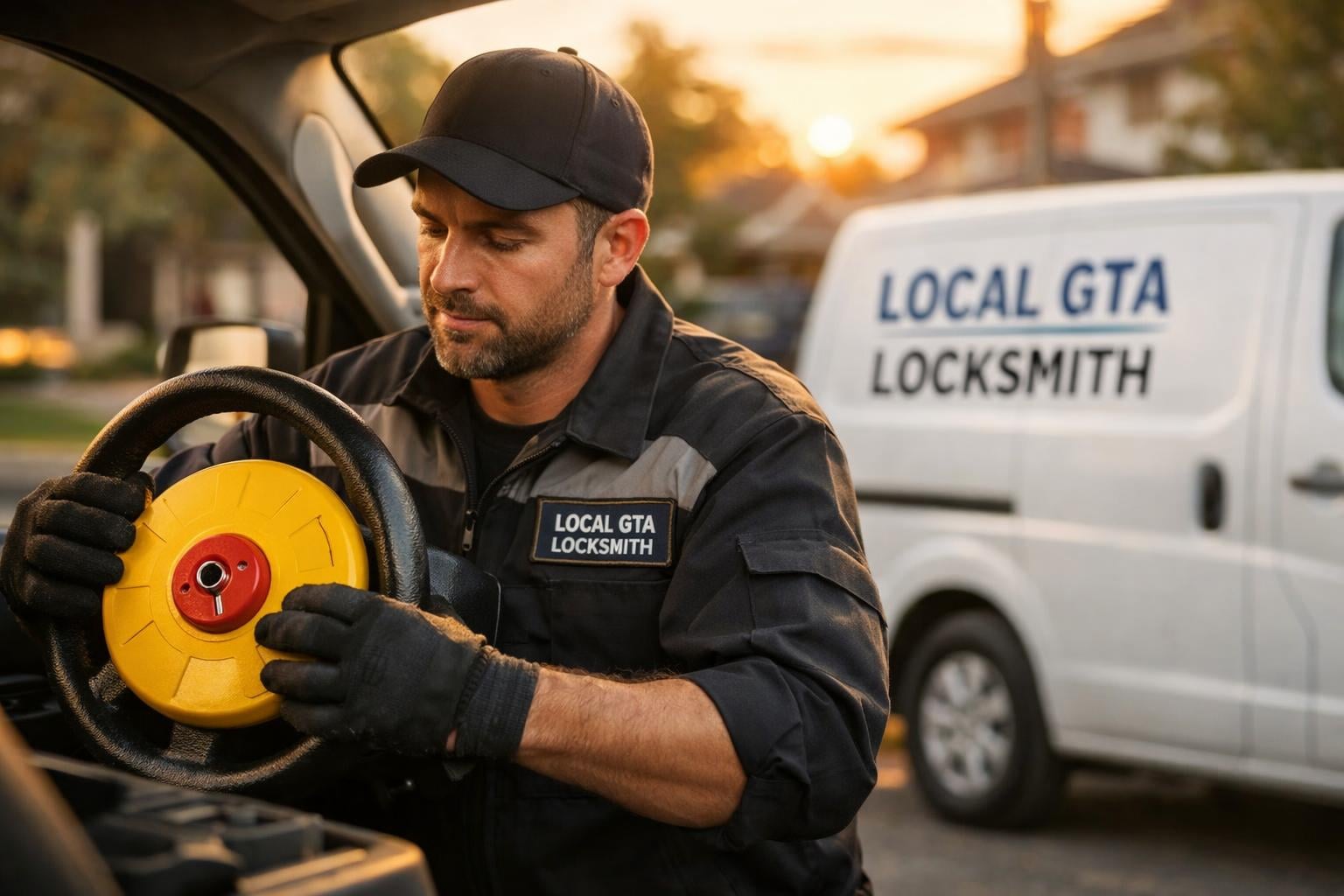
Vehicle Security Upgrade Planning
A broader anti-theft planning page for drivers who want to improve vehicle security, compare practical upgrade paths, and understand where locksmith expertise fits into a credible security strategy.
Best next step
This route is for drivers who need the bigger picture: what risk they are solving, which layer matters most, and what should happen next.
Broader scope
Above a single SKU
Risk-aware
Key exposure and anti-theft
Decision support
Compare upgrade paths
Security guidance
A broader anti-theft planning page for drivers who want to improve vehicle security, compare practical upgrade paths, and understand where locksmith expertise fits into a credible security strategy.
Get a quote by phone
Tell us your vehicle year, make, model, and what happened. We quote over the phone - no obligation until you say go.
Call Now: (647) 557-8103What users are usually trying to solve
This intent often sits above a single service SKU. Users are thinking about theft exposure, convenience, and the realism of their current setup.
The existing setup feels too basic
Users may be reacting to neighborhood theft patterns, an attempted incident, or a general sense that factory protection is no longer enough.
A key or fob exposure changed the risk picture
Sometimes the trigger is not a missing car part but a security event tied to key control.
The owner wants a clearer anti-theft plan
The page works best when it organizes security thinking rather than pretending one product solves every scenario.
What a credible security-upgrade page should cover
This cluster earns value by helping users compare layers, not by exaggerating outcomes.
Deterrence vs response
Some upgrades are about discouraging opportunistic theft, while others help manage the situation after key exposure or attempted unauthorized access.
Key-management habits
Spare-key planning, stolen-key response, and smart-key control all change the practical security posture of the vehicle.
Vehicle-specific suitability
The best security path depends on how the vehicle is used, where it is parked, and which convenience features the owner wants to preserve.
Which path fits this situation?
Security-intent users often need help deciding whether their next move is product-focused, planning-focused, or response-focused.
Vehicle Security Upgrade Service
Use the direct service page if you already know you want an upgrade consultation.
- Built for higher-value informational and commercial-intent searches.
- Useful when the security concern is clear enough to move into a more specific path.
Car Alarm Installation
Compare whether an alarm-focused path is the better fit.
- Keeps the positioning educational, not alarmist.
- Useful when the security concern is clear enough to move into a more specific path.
Push-to-Start Key Security
Useful for proximity-key owners comparing anti-theft next steps.
- Connects upgrades with key management, alarms, and stolen-key workflows.
- Useful when the security concern is clear enough to move into a more specific path.
Useful next-step branches
Security-intent users need clean ways to continue researching without falling into thin content loops.
Step-by-step
- 1
Car alarm installation
A direct operational branch when alarm hardware is the leading upgrade under consideration.
- 2
Stolen-key response
Relevant if the new security concern started with a lost or stolen key event.
- 3
Push-to-start key security
Useful for owners of modern vehicles who are specifically worried about proximity-key and convenience-system risk.
Why this matters
- Built for higher-value informational and commercial-intent searches.
- Keeps the positioning educational, not alarmist.
- Connects upgrades with key management, alarms, and stolen-key workflows.
Why this guidance is useful
The point of the security cluster is to help users compare realistic paths without collapsing everything into one generic sales page.
Security signal 1
Built for higher-value informational and commercial-intent searches.
Security signal 2
Keeps the positioning educational, not alarmist.
Security signal 3
Connects upgrades with key management, alarms, and stolen-key workflows.
Security routes and next steps
These routes help connect the educational intent with the service or planning path that fits the situation.
Vehicle Security Upgrade Service
Use the direct service page if you already know you want an upgrade consultation.
Go to Vehicle Security Upgrade ServiceCar Alarm Installation
Compare whether an alarm-focused path is the better fit.
Review Car Alarm InstallationPush-to-Start Key Security
Useful for proximity-key owners comparing anti-theft next steps.
Review Push-to-Start Key SecurityCommon questions
Short answers to the questions users usually ask before choosing a security or anti-theft branch.
What counts as a vehicle security upgrade?
It can include alarm-related decisions, key-management improvements, and other anti-theft measures that fit how the vehicle is used and what risk the owner is trying to reduce.
Should security planning focus only on hardware?
No. A credible plan also includes how keys are stored, whether a spare exists, and how the owner responds if a key is lost or exposed.
Is this page meant to replace the direct service page?
No. It works best as an educational cluster page that helps the user choose the right next service or guidance path.
Ready to move forward?
Need the broader anti-theft route?
Start with this planning page if you are still deciding what the right security layer is, then move into the more specific service or guidance pages below.